You pulled up a corner of old vinyl flooring, saw a crumbly grey backing, and a small voice in your head said asbestos? If your home was built or renovated before the 1990s, that voice is worth listening to. Asbestos was used in dozens of common building materials, and disturbing them during a renovation is exactly when fibres get into the air.
Most do-it-yourself homeowners don’t get hurt because they’re reckless. They get hurt because of a handful of predictable mistakes — small shortcuts that feel harmless in the moment. The tricky part with asbestos is that there is no immediate warning sign: no smell, no sting, no visible cloud that tells you a tile or a ceiling has just released fibres. The damage, when it happens, shows up decades later. That delay is exactly why good habits during the renovation matter so much. Here are the six mistakes that come up again and again, and what to do instead.
1. Assuming a newer-looking surface means no asbestos
A freshly painted basement or a kitchen that was “redone in 2005” can still hide older asbestos-containing materials underneath. New finishes are routinely installed on top of old vinyl tile, old plaster, or old pipe insulation. The age of the visible surface tells you almost nothing about what is in the layers below it.
Do instead: Treat the original construction date of the home as your guide, not the date of the last cosmetic update. Common suspects in older Quebec homes include vinyl-asbestos floor tiles and their black mastic, “popcorn” or textured ceilings, vermiculite attic insulation, plaster and joint compound, pipe and boiler wrap, and some cement board and roofing products.
2. “Just checking” by breaking a piece off
The instinct to snap off a chunk and look at it closely is completely natural — and it’s one of the worst things you can do. Asbestos is dangerous when it is disturbed and the microscopic fibres become airborne. You cannot identify asbestos by eye, and breaking a sample releases exactly the fibres you’re trying to avoid.
Do instead: Leave suspect material intact. The only reliable way to know is laboratory analysis of a properly collected sample. If material is in good condition and you can simply avoid disturbing it, the safest move is often to leave it alone and work around it.
3. Relying on a regular dust mask
A paper nuisance dust mask, a cloth mask, or a basic surgical mask does essentially nothing against asbestos fibres. Even many disposable respirators are not the right tool for this hazard. Asbestos fibres are far smaller than ordinary construction dust, and they slip past loose-fitting or low-rated filtration.
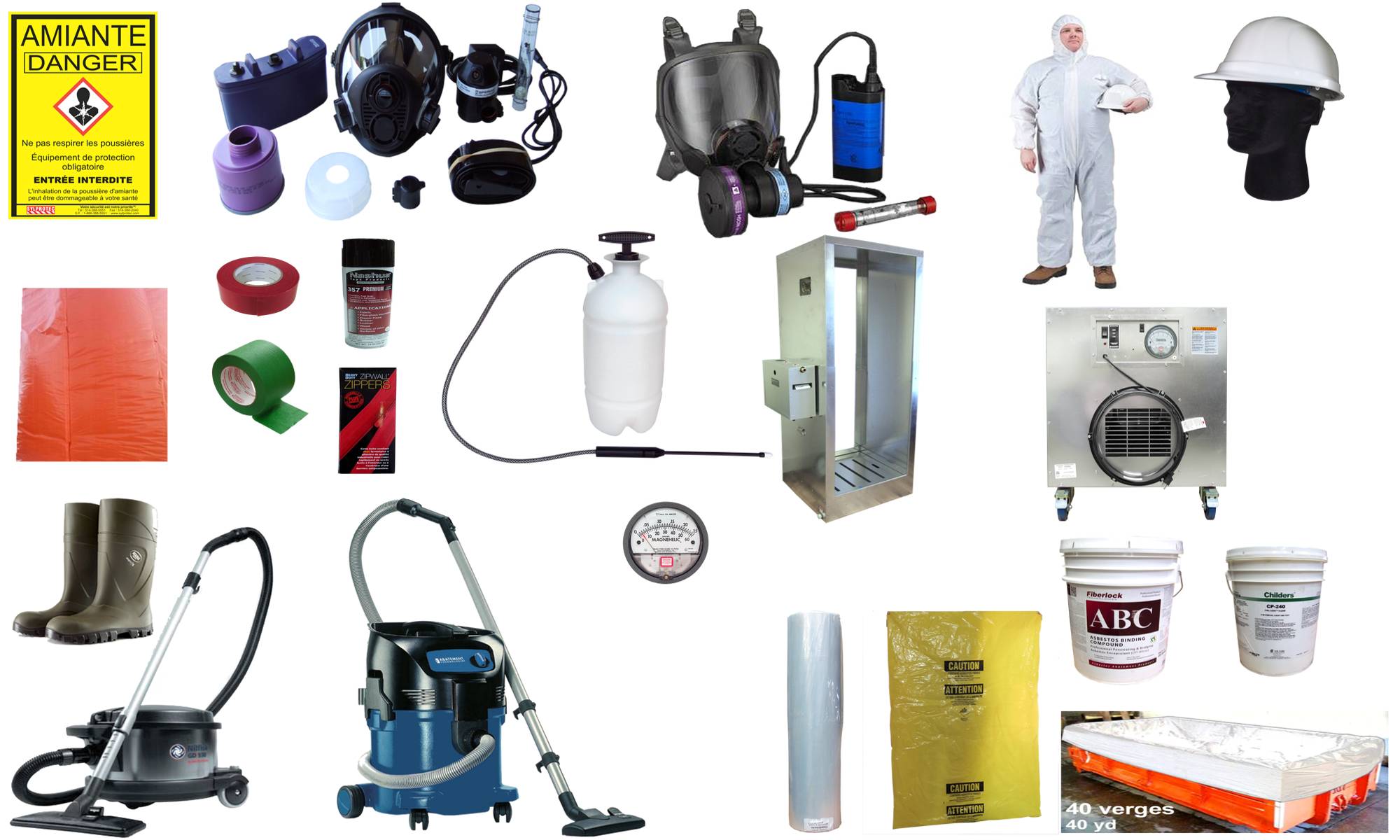
Do instead: For any work that could disturb asbestos, the recommended baseline is a tight-fitting respirator with P100 filters, properly fitted to your face. A reusable half-mask such as a 3M 6300 half-face respirator paired with P100 particulate filters is the kind of setup intended for this fibre size. A respirator only protects you if it seals — facial hair and a poor fit break the seal.
4. Forgetting that fibres ride home on your clothes
Even people who wear a respirator often skip body protection. Then they walk through the house, sit on the couch, and toss their clothes in the family laundry — spreading fibres to rooms and people that were never near the work. This “take-home” exposure is a well-documented way that family members get exposed.
Do instead: Use disposable coveralls with a hood that you can remove and bag on site, plus disposable gloves, so the protective layer never enters your living space. Don’t shake out or vacuum your clothing with a household vacuum, and don’t drive home in gear you wore during the work. Anything contaminated that can’t stay sealed and disposable should be treated as waste, not laundry. The goal is simple: nothing leaves the work area except sealed bags.
5. Sweeping, sanding, or using a shop vac
Dry sweeping a floor, sanding a textured ceiling, or running a regular shop vacuum over the debris all do the same thing: they launch settled fibres back into the air, where you breathe them. A standard vacuum simply blows the finest fibres straight through the filter and out the exhaust.
Do instead: Keep suspect material wet to hold fibres down, never dry-sand or dry-sweep, and never use a household or standard shop vacuum. Proper abatement relies on wetting methods and HEPA-filtered equipment, with debris sealed in dedicated bags. If the job is big enough to need this gear, it is usually big enough to hand to a qualified contractor.
6. Not knowing when the job is no longer a DIY job
The biggest mistake is treating every situation the same. A single intact floor tile you decide to seal and cover is a very different risk than tearing out a whole ceiling, removing pipe insulation, or disturbing crumbly (“friable”) material that breaks apart easily. Friable material releases fibres far more readily, and larger jobs come with handling, containment, and disposal rules.
Do instead: Be honest about scope. If the material is friable, if there’s a lot of it, or if you can’t keep it fully contained and intact, bring in professionals who are equipped and trained for asbestos work. Disposal also matters: asbestos waste cannot simply go in your regular trash, and your municipality or eco-centre will have specific requirements.
The honest bottom line
Quick reference before you start a project in an older home: confirm the original build era, leave suspect material intact, get it tested if you’ll disturb it, wear a P100 respirator and disposable coveralls when you must be near it, keep everything wet and sealed, and call a professional for friable material or large jobs.
This article is a safety primer, not a substitute for testing or for the rules that apply where you live. The two things that protect most homeowners are simple: don’t disturb what you can leave alone, and get suspect material tested before you cut, sand, or demolish. When you do have to be near it, the right respirator with P100 filters and disposable body protection are the minimum, not the nice-to-have.
For background on the health risks and where asbestos hides in homes, Health Canada maintains a clear public resource on the health risks of asbestos. You can also start from our asbestos safety home page for more renovation-focused guidance. When in doubt, slow down — fibres you never release are the ones that never hurt you.